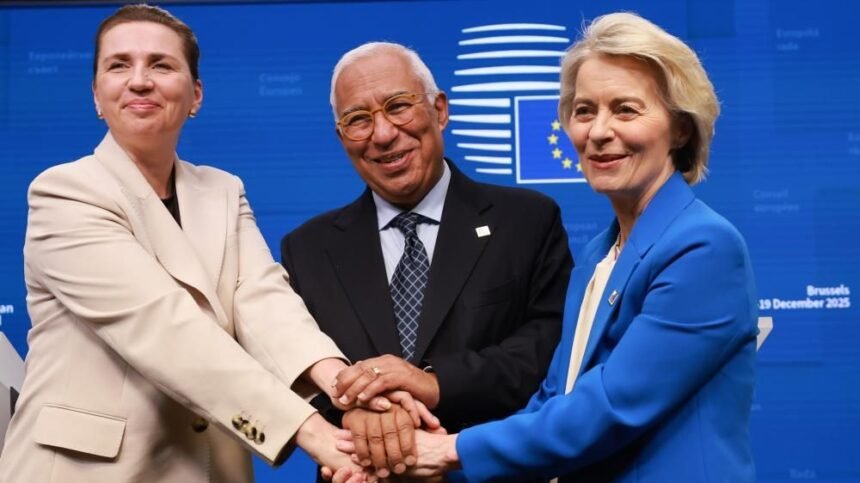
The European Union’s attempt to convert the Russian Central Bank’s immobilized assets into a zero-interest reparations loan failed when the bloc’s 27 leaders decided to use the tried-and-true technique of joint debt to back Ukraine’s resistance instead of taking a risk.
The main opponent of the reparations loan, Belgian Prime Minister Bart De Wever, stated, “If you take money from Putin, you are exposed,” explaining why the loan failed. “People like assurance if you’re exposed, but where can you obtain certainty? in waterways that have been mapped.”
Without touching the €210 billion in Russian assets, which will stay immobile until Moscow stops its war of aggression and pays Kyiv for the losses, the bloc will now go to the markets to raise €90 billion on its own.
Russia is fighting this battle. And Russia ought to foot the bill,” von der Leyen stated. “It should not only be European taxpayers who bear the brunt.”However, von der Leyen was not the one who would characterize what would turn out to be the most intense political discussion of 2025. Friedrich Merz, the German Chancellor, was the one. Von der Leyen issued an opinion piece in the Financial Times a few days after his speech, fully endorsing the initiative and portraying it as inevitable despite its lack of precedent.
Also Read:
Tesla Shareholders Accepted Elon Musk’s $1 Trillion Pay Agreement